2025
ColpoSense: AI-based Cervical Cancer Detector from Colposcopic Images
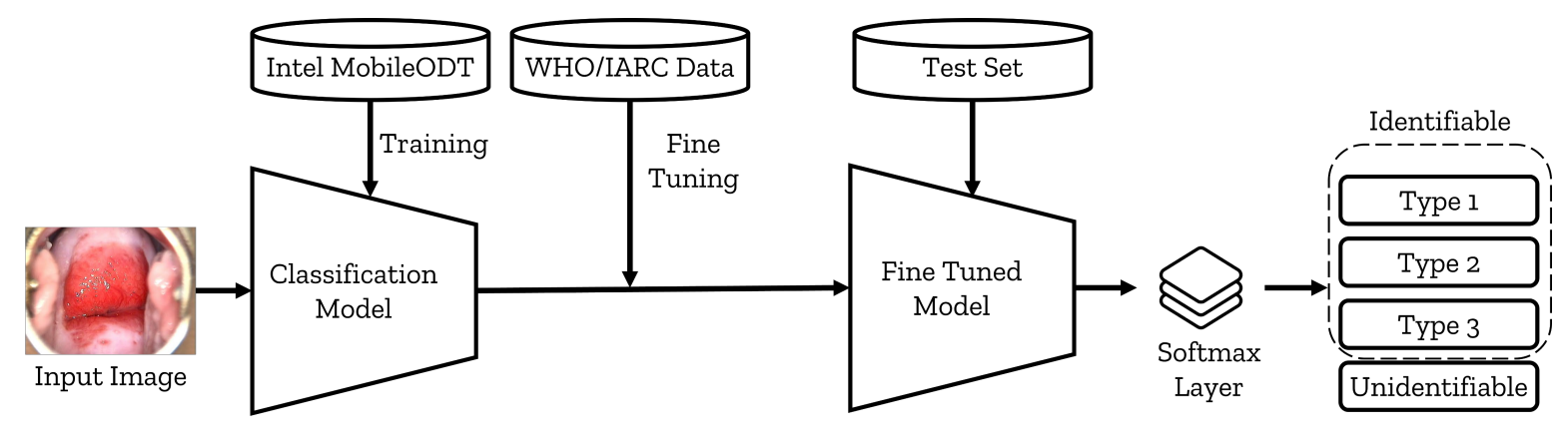
Cervical cancer is one of the most common cancers affecting women worldwide, with a large number of cases occurring in low- and middle-income countries where access to early screening is limited. Colposcopy is a widely used method for examining the cervix and identifying abnormal tissue, but accurate interpretation often requires trained specialists. Our lab has developed an artificial intelligence-based framework to support cervical cancer screening by analyzing colposcopic images and assisting clinicians in identifying important diagnostic features.
The system analyzes medical images to detect key visual patterns related to cervical abnormalities and evaluates clinical indicators commonly used during screening. By learning from multiple datasets of colposcopic images and associated medical information, the framework can help assess cervical characteristics and support clinical decision-making. This approach aims to enhance screening accessibility, assist healthcare providers in diagnosis, and contribute to earlier detection of cervical abnormalities, particularly in resource-limited healthcare settings.