Computational Pathology

2025 - 2026

HER2 Classification from Real and GAN- Generated IHC Images
HER2 GAN

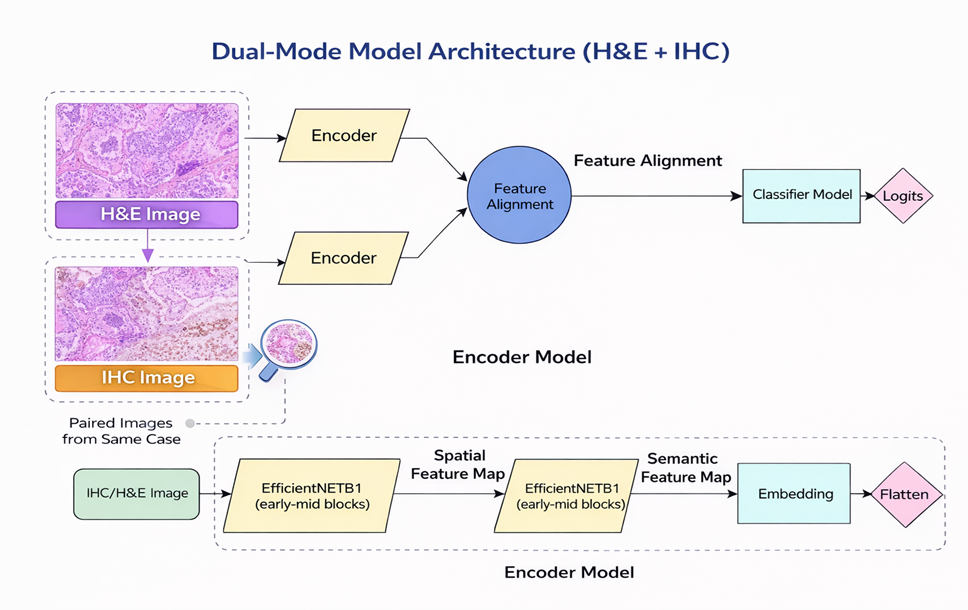
Breast cancer diagnosis often involves identifying biomarkers such as HER2, which helps doctors understand how aggressive a tumor is and decide on the best treatment. Traditionally, HER2 status is determined using a laboratory staining technique called immunohistochemistry (IHC). However, this process can be time-consuming and requires specialized equipment and expert analysis.

To make this process more efficient, artificial intelligence can be used to analyze digital images of breast tissue. Deep learning models examine both H&E-stained and IHC-stained histopathology images to identify patterns related to HER2 expression. In addition, generative AI can create synthetic IHC images from H&E images to provide extra information for the analysis. By combining these approaches, the system can help improve the accuracy and speed of HER2 classification in digital pathology.

2025

Histoscope: AI-Assisted Classification of Breast Cancer Histopathology Images

Histoscope

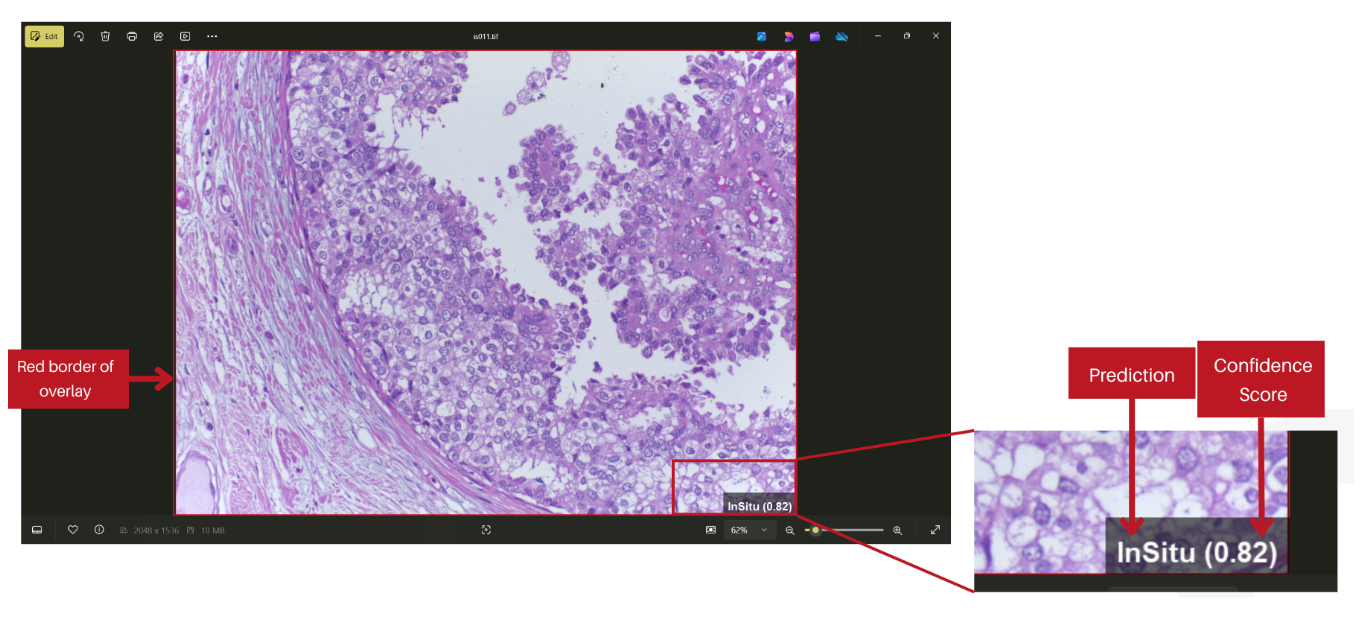
Breast cancer is one of the most common cancers affecting women worldwide, and early diagnosis is critical for improving patient outcomes. While histopathology is the gold standard for breast cancer diagnosis, it is complex, slow, and reliant on pathologist expertise. To address the increasing diagnostic workload, we are developing AI tools for faster, more reliable analysis of histopathology images. A multi-stage deep learning framework is designed to analyze histopathological images and classify breast tissue into different categories.

The system processes images at multiple levels, examining both small tissue regions and entire images to capture important structural and cellular patterns. This layered approach improves the model’s ability to distinguish between normal tissue and different forms of breast cancer. We aim to combine AI with digital pathology to support pathologists in more efficient breast cancer diagnosis, reducing variability, and improving early detection and clinical decisions.