The recent 'Mpox' outbreak, formerly known as 'Monkeypox', has been a significant public health concern and spread to
over 110 countries globally. Mpox can be difficult to recognize in its early stages because its skin lesions often
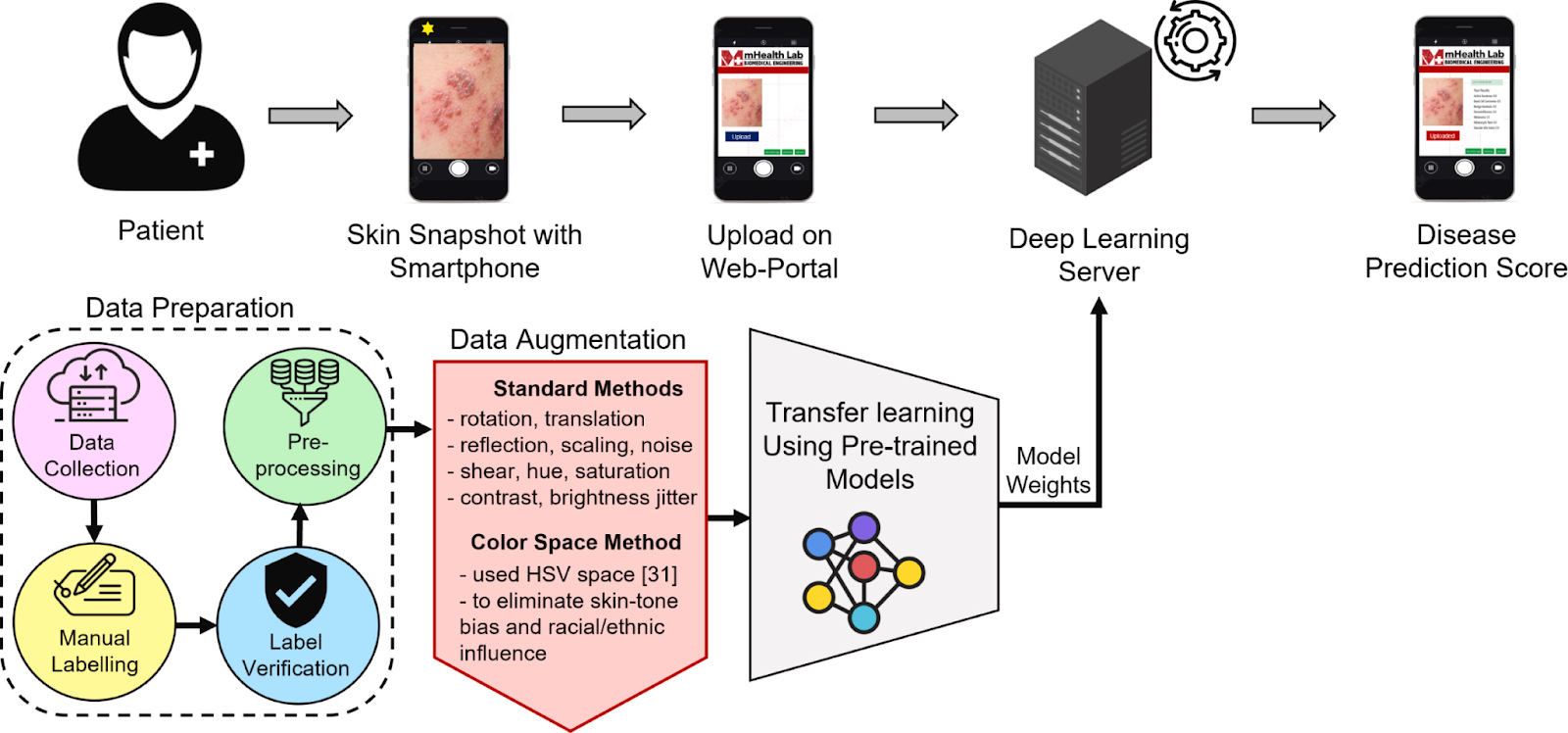
resemble those caused by other infectious diseases. In our lab, we develop web-based AI systems that help make this kind
of screening faster, more accessible, and more scalable. Our work combines medical image analysis, dataset development,
and deep learning to identify visual patterns in skin lesion photographs that may indicate suspected mpox. We also study
how to improve fairness and generalizability across diverse skin tones, since skin appearance can vary substantially
across populations and biased systems can reduce real-world usefulness.
Beyond algorithm development, we translate our models into practical prototype web applications where users can upload
skin images for rapid preliminary assessment. These tools are not intended to replace laboratory testing or expert
clinical judgment. Instead, they are designed to serve as decision-support systems that can assist with early screening,
outbreak preparedness, and triage in settings where specialist care or confirmatory testing may not be immediately
available.
Publications